
Schengen Multiple-Entry Visa Insurance: Which Certificate Do You Need?
You need a certificate covering the dates of your first intended stay, with at least EUR 30,000 medical cover valid in all Schengen States, to apply for a Schengen multiple-entry visa. The application form then makes you declare you are aware of the need for insurance on any subsequent visits. A single-trip certificate from AED 30 satisfies the consulate; an annual multi-trip policy covers the visa's later trips.
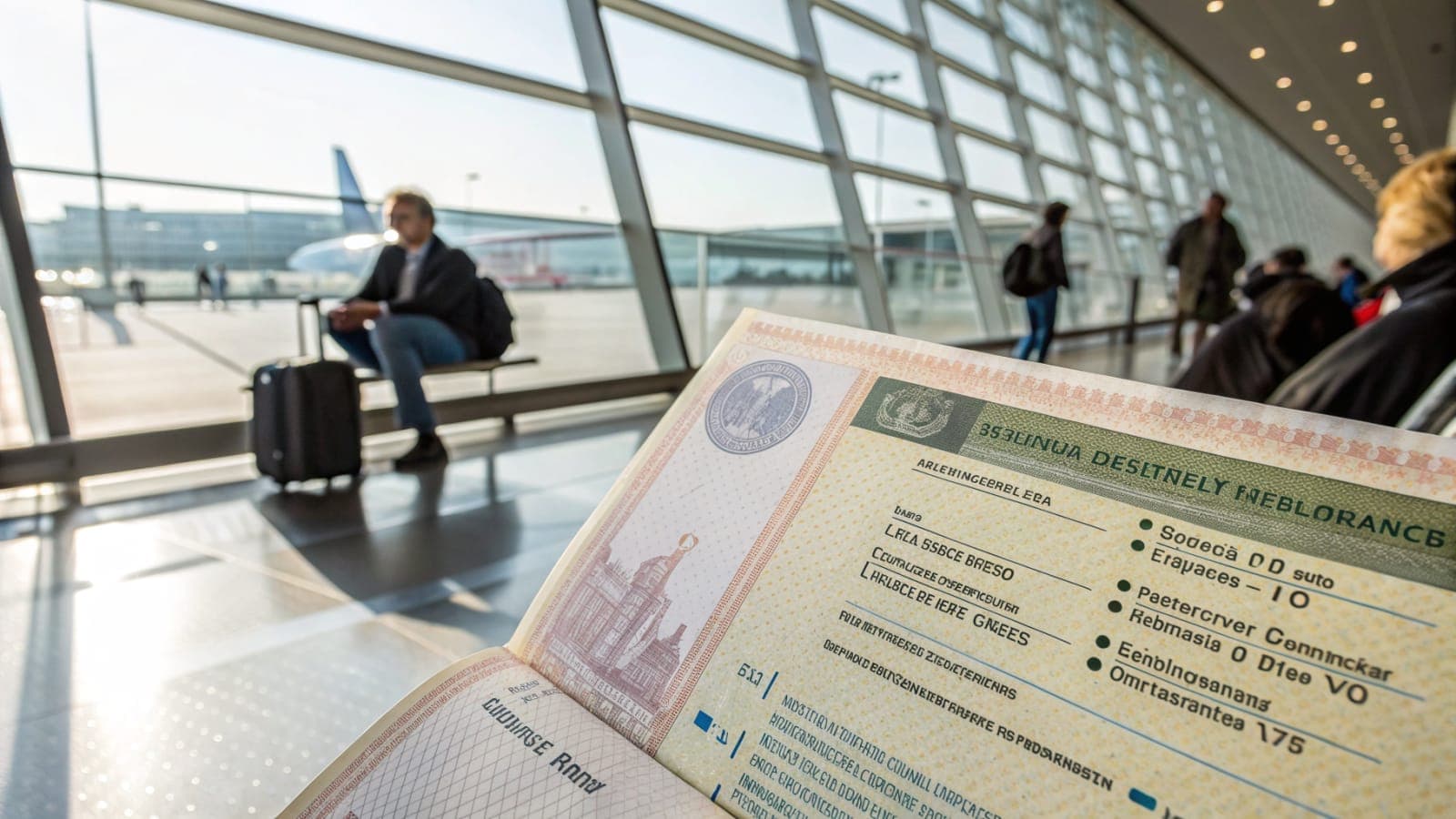
You need an insurance certificate that covers the dates of your first trip, not the whole life of the visa, to apply for a Schengen multiple-entry visa. The harmonised Schengen visa application form asks for the arrival and departure dates of your "first intended stay" and makes you declare that you are aware of the need to have adequate travel medical insurance for that stay "and any subsequent visits". So a single-trip certificate with EUR 30,000 medical cover gets the visa issued, and an annual policy is what keeps you compliant on every trip after it.
At a glance
| Fact | Detail | Source |
|---|---|---|
| What a multiple-entry visa allows | Several visits to the Schengen area for as long as the visa is valid | European Commission |
| Minimum medical cover | EUR 30,000, valid for all Schengen States and the entire period of intended stay | EEAS |
| Insurance dates the form asks for | Arrival and departure dates of the first intended stay | Commission application form |
| Declaration for multiple-entry applicants | Aware of the need for insurance on the first stay and any subsequent visits | Commission application form |
| Maximum stay per visit | 90 days in any 180-day period | European Commission |
| Visa fee | EUR 90 for adults, EUR 45 for children aged 6 to 12 | European Commission |
| Processing time | 15 days, extendable to 45 days | European Commission |
What you need
- A passport valid for at least 3 months after you leave the last Schengen country visited (European Commission)
- The Schengen application form with "Multiple entries" ticked and the first intended stay dated (Commission form)
- A travel medical insurance certificate with at least EUR 30,000 cover, valid in all Schengen States for the first stay (EEAS)
- Evidence of accommodation and a flight reservation for the first trip
- Evidence of financial means and of your intention to return to the UAE
- Your visa history, which is what justifies the multiple-entry request
- The visa fee and the visa centre's service fee
Sort your travel insurance first
Cover that meets Schengen visa requirements, issued instantly by AXA. From AED 30.
What does a Schengen multiple-entry visa let you do?
A multiple-entry visa lets you enter the Schengen area as many times as you like while the visa is valid. The European Commission describes it as "allowing several visits to the Schengen area for as long as the visa is valid", against a single-entry visa that allows one entry only (Applying for a Schengen visa).
Each visit still sits under the short-stay cap of 90 days in any 180-day period, and the Commission's short-stay calculator is the tool to check your remaining days. The visa does not make you a resident and it does not extend how long any one trip can last.
For a UAE resident who flies to Europe three or four times a year, the multiple-entry visa saves a new application and a new appointment every time. It also changes which insurance product makes sense, which is the point of this guide.
Which insurance certificate do you need for the application?
A certificate covering the dates of your first trip is what the application needs, even when you are asking for a visa that lasts years. The Commission's harmonised application form asks in field 27 for the "intended date of arrival of the first intended stay" and the "intended date of departure from the Schengen area after the first intended stay", and it is those dates your certificate has to match.
The cover on that certificate must meet the standard Schengen minimum. The EEAS states it as travel medical insurance "covering the entire period of intended stay, valid for all Schengen States" for repatriation on medical grounds, urgent medical attention, emergency hospital treatment or death, with minimum cover of EUR 30,000 (EEAS general Schengen visa requirements). The Commission's own wording is "medical insurance covering emergency medical care, hospitalisation and repatriation (including in the event of death)" (European Commission).
Travl's Schengen-compliant travel insurance is built to that specification: EUR 30,000 medical cover, issued by AXA, accepted by VFS Global and BLS International, from AED 30. You pick the Europe region and enter the first trip's dates, and the certificate arrives by email.
Do you have to insure the whole validity of the visa?
No, you do not have to buy a policy for the full one to five years the visa might run, and no consulate can issue a certificate that long anyway. What the form does instead is take a declaration from you. The exact wording, printed under "Applicable in case a multiple-entry visa is issued", reads: "I am aware of the need to have adequate travel medical insurance for my first stay and any subsequent visits to the territory of Member States" (Commission application form).
That sentence moves the responsibility onto you for every later trip. The consulate checks the first stay is insured, you sign that you know the rest is on you, and the visa is issued on that basis.
It is a real obligation, not a formality. Border guards can ask for proof of insurance at entry, and a hospital bill in Europe without cover is your own to pay. So the practical question becomes: what is the cheapest way to be honestly insured on trip two, three and four?
When is a single-trip certificate enough?
A single-trip certificate is the right product when you are applying for the visa and only have the first trip planned. It costs from AED 30 with Travl, it carries the EUR 30,000 medical cover the embassy asks for, and it covers exactly the dates you wrote in field 27 of the form. Buy it, submit it, and the insurance part of your file is done.
It is also enough if you end up travelling only once or twice in the year, with weeks or months in between. You buy a fresh single-trip policy for each trip, dated to that trip, and each one is Schengen-compliant on its own.
What a single-trip certificate cannot do is cover a trip you have not dated yet. If you land in Paris in March on a two-week certificate and fly back for a conference in June, the June trip has no cover until you buy again. Forgetting that step is the most common way multiple-entry holders end up uninsured.
When is an annual multi-trip policy the better buy?
An annual multi-trip policy is the sensible product once the visa is issued and you expect to use it more than two or three times in a year. Travl's annual multi-trip insurance is a 12-month policy covering unlimited trips from AED 245, so you stop thinking about insurance every time you book a flight.
The maths is simple. Three single-trip policies for two-week trips already cost a meaningful share of an annual premium, and the annual policy also covers the last-minute weekend you did not plan for. For a visa built around repeat travel, matching it with a policy built around repeat travel is the obvious pairing.
Two things to check before you buy. Choose a region that includes every country you will visit during the year, because a destination outside the chosen region is not covered, and read the policy document for the maximum length of any single trip, since annual policies cap each journey. Travl's team on the contact page can confirm the limits for your plan.
You can also use the annual policy for the application itself. If you are certain you will travel repeatedly, buy the 12-month policy before you apply, and the certificate covers the first stay dates the consulate checks as well as every trip that follows. Our guide to single trip versus annual travel insurance walks through the break-even in more detail.
How do you apply for the multiple-entry visa from the UAE?
You apply at the consulate of the country you will spend the longest time in, through its visa centre in Dubai or Abu Dhabi. The Commission's rule is to apply at the consulate of the main destination, or the first country visited if stays are equal, and to lodge the file at least 15 days before travel and no earlier than 6 months beforehand (European Commission).
The file itself is the standard Schengen set: passport, form, photo, insurance, proof of accommodation, a flight reservation, financial evidence and proof of ties to the UAE (European Commission). For the flight and hotel, a verified flight reservation from Dummy Ticket 365 with a real PNR from USD 13 covers proof of onward travel, and the same service issues verified hotel reservations by email that embassies accept as proof of accommodation.
A day-by-day plan for the first trip helps the officer see the visits are genuine. Travl's travel itinerary generator produces an embassy-ready PDF for AED 49, with a free preview before you pay.
The multiple-entry request is a separate decision from the visa itself, and it turns on your travel history and the reason you need repeat access. If you would rather have someone build the case for you, Schengen visa assistance from VisaWadi covers document review, file preparation and appointment booking for UAE residents from AED 299. Travl does not file or review visa applications.
Why do multiple-entry applications get refused or downgraded?
The insurance certificate that does not match the first stay dates is the avoidable cause that sits squarely in your control. If the form says arrival on 3 May and the certificate starts on 5 May, the file is incomplete and you are back to the visa centre.
Other causes are just as avoidable. Cover below EUR 30,000, a policy limited to one country instead of all Schengen States, or a certificate that does not name repatriation all fail the standard set out in the EEAS requirements. A passport that expires less than 3 months after you leave the last Schengen country visited fails the Commission's rule for multiple-entry visas (European Commission).
The multiple-entry part is downgraded to a single entry when the file does not justify repeat travel. A thin visa history, no clear reason to return and weak evidence of ties to the UAE all push a consulate toward a single-entry issue. Applying 6 months early, with a clean prior record and a consistent story, is what earns the longer visa.
What does it all cost?
| Item | Cost | Who charges it |
|---|---|---|
| Schengen visa fee, adult | EUR 90 (European Commission) | Consulate |
| Schengen visa fee, child aged 6 to 12 | EUR 45 (European Commission) | Consulate |
| Visa centre service fee | Charged on top of the visa fee where a service centre handles the file (European Commission) | VFS Global or BLS International |
| Single-trip Schengen insurance | From AED 30 | Travl (AXA) |
| Annual multi-trip insurance | From AED 245 | Travl (AXA) |
| Itinerary PDF | AED 49 | Travl |
| Visa assistance | From AED 299 | VisaWadi |
A flight or hotel reservation for the file is a separate purchase, priced in US dollars from USD 13 by Dummy Ticket 365. The visa fee is not refunded if the visa is refused, which the form makes you acknowledge (Commission application form). Our breakdown of how much travel insurance costs in the UAE covers what drives the premium on each Travl plan, and the travel insurance hub lets you compare them side by side.
Sources
- Applying for a Schengen visa, European Commission, Directorate-General for Migration and Home Affairs
- Harmonised Schengen visa application form, European Commission
- General Schengen visa requirements, European External Action Service (EEAS)
- Short-stay calculator and the 90/180-day rule, European Commission
Insure the first trip now, the rest of the visa later
Travl issues AXA-backed Schengen visa insurance from AED 30 with the EUR 30,000 medical cover consulates check, dated to your first intended stay and accepted by VFS Global and BLS International. Once the multiple-entry visa is in your passport, switch to annual multi-trip cover from AED 245 for every trip that follows.
For the file itself, Dummy Ticket 365 issues a verified flight reservation with a real PNR from USD 13, and VisaWadi handles the Schengen application end to end for UAE residents.
Frequently Asked Questions
Schengen travel insurance
From AED 30
Cover that meets Schengen visa requirements, issued instantly by AXA.
Get insuredDummy ticket
From USD 13
A real flight reservation with a verifiable PNR, issued by Dummy Ticket 365 and delivered by email in minutes.
Dummy Ticket 365