
What Counts as a Medical Emergency Under Travel Insurance?
A medical emergency is a sudden, unexpected illness or injury that starts during your trip and needs treatment before you could reasonably get home. Planned procedures, routine check-ups and care for undeclared pre-existing conditions are excluded. Schengen visa insurance must cover emergency care, hospitalisation and repatriation with a EUR 30,000 minimum, and insurers require a call to their 24-hour assistance line to pre-authorise hospital admissions and repatriation.
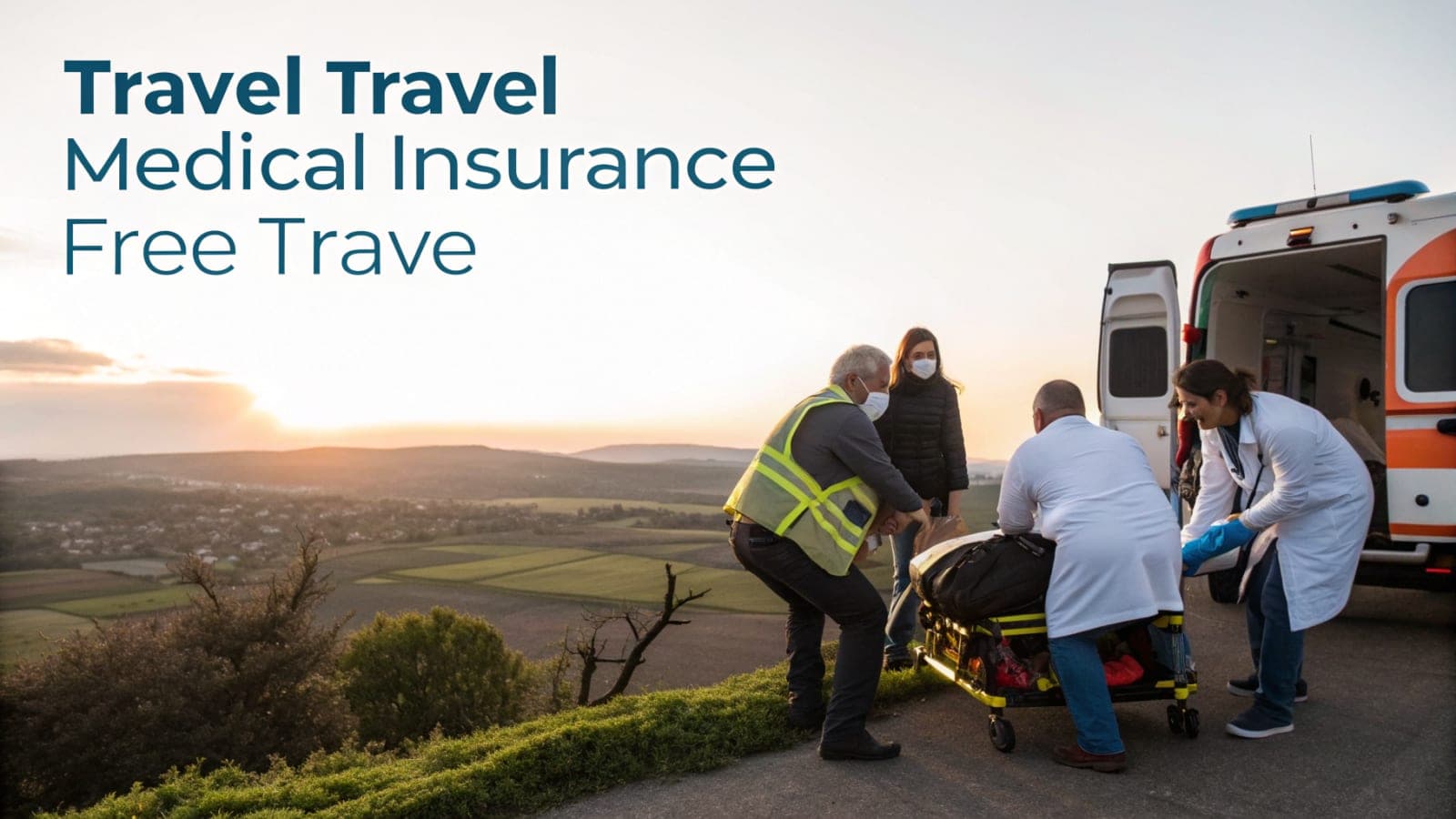
A medical emergency under travel insurance is a sudden, unexpected illness or injury that starts during your trip and needs treatment straight away, before you could reasonably get home. Routine check-ups, planned procedures and follow-up care for something you already had before departure are not emergencies. The Schengen visa rules use the same idea: the European Commission's applying for a Schengen visa page asks for insurance covering emergency medical care, hospitalisation and repatriation, nothing more.
At a glance: how policies draw the line
| Question | Answer | Source |
|---|---|---|
| What must Schengen visa insurance cover? | Emergency medical care, hospitalisation and repatriation, including in the event of death | European Commission |
| Minimum Schengen medical limit | EUR 30,000, valid for all Schengen states and the whole stay | EEAS, general Schengen visa requirements |
| Does a policy cover a condition you already had? | Only if you declared it and the insurer accepted it; an undeclared condition can invalidate the policy | UK Foreign Office |
| Are events after heavy drinking covered? | No, policies exclude events that happen after excessive alcohol or recreational drugs | UK Foreign Office |
| Mental health | Must be declared; treatment for a pre-existing mental health condition can be excluded | UK Foreign Office |
| Who decides what treatment is appropriate? | The insurer's 24-hour assistance helpline advises on treatment and where to get it | UK Foreign Office |
| Travel to a country under a government advisory | Many policies will not cover you there at all | Government of Canada |
What you need before you travel
- Your policy document, with the definitions section and the exclusions list read once before you fly
- Your policy number and the insurer's 24-hour emergency assistance number saved in your phone and written on paper
- A written record of every existing condition, pending test or ongoing treatment you declared when buying the policy
- A list of current medications, with enough supply for the trip plus a few days
- Receipts, discharge notes and doctor's reports for anything that happens abroad, kept together for the claim
- A copy of the policy certificate for your visa file if you are applying for a Schengen visa
Sort your travel insurance first
AXA-backed cover for UAE residents, issued the same day. From AED 30.
What counts as a medical emergency under travel insurance?
An emergency is an unforeseen illness or injury that begins during the trip and needs immediate treatment to protect your health. Policies define it in the definitions section of the wording, and that definition, not your own sense of urgency, decides whether a claim is paid.
Three tests appear across policy wordings. The condition was not known or reasonably expected before departure, the treatment could not safely wait until you returned home, and a doctor confirmed it was necessary at the time.
The UK Foreign Office's foreign travel insurance guidance lists what a policy should pay for: treatment in state or private hospitals, emergency transport such as an ambulance, getting home after treatment if you cannot use your original ticket, and repatriation costs if you or a family member die abroad. That is the shape of emergency medical cover, and it is what Travl's travel medical insurance is built around.
Is a medical emergency the same thing for a Schengen visa?
Yes, the Schengen rules use a narrower version of the same definition. The European Commission's Schengen visa page requires medical insurance covering emergency medical care, hospitalisation and repatriation, including in the event of death.
The EEAS document on general Schengen visa requirements adds the figure: a minimum of EUR 30,000, valid for all Schengen states and covering the entire period of the intended stay. It words the scope as urgent medical attention, emergency hospital treatment, repatriation for medical reasons or death.
Notice what is missing from that list: routine care, elective treatment and anything planned before you left. Travl's Schengen visa insurance from AED 30 meets the EUR 30,000 minimum and is accepted by VFS Global and BLS International, but it is emergency cover, not a health plan for Europe.
What is the difference between emergency, elective and routine care?
Emergency care is paid, elective care is excluded, and routine care is excluded. The category is decided by whether the treatment could have waited, not by how serious the condition is.
Elective treatment is anything you choose to have abroad that could be done at home: a knee operation you had been putting off, cosmetic work, fertility treatment or a course of dental implants. Policies exclude it even when it is medically justified, because the trip was not the cause.
Routine care is the ongoing management of a known condition: prescription refills, blood tests, check-ups, physiotherapy sessions. A flare-up of a declared condition that lands you in hospital is an emergency; the monthly appointment you scheduled to fall during the trip is not.
Read the wording for the phrase used for treatment abroad that becomes non-urgent. Once a doctor confirms you are fit to travel, the emergency ends, and continuing care in the destination is no longer covered while a flight home would be.
Are pre-existing conditions covered in an emergency?
A pre-existing condition is covered only if you declared it and the insurer accepted it in writing. The UK Foreign Office is direct on this: declare existing conditions or pending treatment or tests, because failing to declare something may invalidate your travel insurance.
The Government of Canada's travel insurance guidance goes further and tells travellers to get a written agreement that the policy covers the condition, otherwise a claim can be null and void. It also flags the stability clause, which requires no change to your condition or medication for a set period before departure.
In practice, a heart attack on holiday is a medical emergency in anyone's definition. Whether it is a paid emergency depends on whether the underlying heart condition was disclosed at purchase. Our guide to pre-existing conditions and travel insurance walks through the disclosure process for UAE residents.
Does travel insurance cover pregnancy, dental pain and mental health?
Each of these is covered as an emergency only within limits the wording spells out, so treat them as separate checks rather than assuming they sit under general medical cover.
Pregnancy
Complications of pregnancy that arise unexpectedly are treated as emergencies; a planned delivery abroad is not. Policies set a cut-off in weeks of pregnancy after which travel is excluded, and the number is in the wording, so check it before booking a late trip.
Dental
Emergency dental cover pays for immediate relief of sudden pain, a broken tooth or an abscess. It does not pay for crowns, implants, orthodontics or any work that could wait for your dentist at home, and it carries its own smaller limit within the medical section.
Mental health
The UK Foreign Office says you must declare mental health conditions or risk invalidating your policy, and warns that some policies exclude treatment related to a pre-existing mental health condition. The Government of Canada makes the same point: a plan may not cover mental health disorders at all. Read the exclusions list for this line specifically.
Does alcohol cancel medical cover?
Yes, if the emergency happened after excessive drinking. The UK Foreign Office notes that travel insurance policies do not cover events that happen after you have drunk excessive alcohol or taken recreational drugs or other substances.
The exclusion applies to the cause, not the diagnosis. A fall on a hotel staircase is an emergency; the same fall after a night of heavy drinking can be refused on the hospital's blood alcohol reading. The Government of Canada lists drug or alcohol-related incidents among the questions to put to an insurer before buying.
The same logic applies to activities. Both sources say the policy must cover every activity you plan to undertake, and the Canadian guidance names mountaineering, skiing, scuba diving and extreme sports as activities policies exclude unless added. See our adventure sports cover guide for how that works.
Why do I have to call the assistance line before treatment?
Because the assistance line is the insurer's route to confirming that the treatment is an emergency, agreeing where you are treated and arranging direct payment to the hospital. The UK Foreign Office describes it as a 24-hour helpline offering support and advice about appropriate treatment, and tells travellers to carry the policy number and the emergency assistance number.
Pre-authorisation matters most for anything expensive: an admission, surgery, an air ambulance or a repatriation flight. Policy wordings require that the insurer approves these in advance, and a repatriation you arranged yourself without approval can be refused or paid only up to what the insurer would have spent.
If you are treated in an emergency room before you can call, call as soon as you are able and keep every document. Travl's claims page explains how UAE residents start a claim on an AXA policy by email or WhatsApp, and how Travl submits it and handles follow-up.
Why do medical emergency claims get refused?
Claims are refused for avoidable reasons far more than for the medicine itself. Each of the causes below is fixable before you leave.
- An undeclared condition. The single biggest cause. The UK Foreign Office says failing to declare a condition, pending treatment or test may invalidate the policy.
- Treatment that could have waited. Elective surgery, check-ups and planned dental work are not emergencies under any wording.
- Alcohol or drugs. Events after excessive drinking or recreational drug use are excluded.
- No call to the assistance line. Large costs incurred without pre-authorisation are the easiest for an insurer to challenge.
- Wrong region on the policy. Travl prices by region, and a destination outside the region you chose is not covered. Check the country falls in the region you selected on the travel insurance quote form.
- Travelling against government advice. The Government of Canada notes many policies will not cover you in regions under an official travel advisory.
- No paperwork. Missing receipts, discharge summaries or a doctor's report delay or sink a claim. See our guide to filing a travel insurance claim.
What does emergency cover cost, and what do you still pay?
| Item | Who pays | Notes |
|---|---|---|
| Travl Schengen visa insurance premium | You, from AED 30 | EUR 30,000 medical limit, issued by AXA, accepted by VFS Global and BLS International |
| Travl international insurance premium | You, from AED 70 | EUR 80,000+ medical, plus cancellation, baggage and delay cover |
| Travl annual multi-trip premium | You, from AED 245 | 12 months of unlimited trips |
| Emergency treatment, hospital stay, ambulance | Insurer, up to the medical limit | Subject to the emergency definition and pre-authorisation for large costs |
| Policy excess per claim | You | The fixed amount deducted from each claim, stated in the wording |
| Elective, routine and undeclared-condition treatment | You | Excluded, regardless of the policy limit |
| Costs above the medical limit | You | Choose a higher limit for the USA, Canada and long trips |
For a UAE resident deciding between plans, the medical limit is the number to compare, not the premium. Our post on what travel insurance covers sets the sections side by side, and the Travl FAQ answers the common questions on AXA policy documents.
Sources
- Applying for a Schengen visa, European Commission, Directorate-General for Migration and Home Affairs
- General Schengen visa requirements, European External Action Service
- Foreign travel insurance, UK Foreign, Commonwealth and Development Office
- Travel insurance, Government of Canada
Cover that pays when it is a real emergency
Travl's AXA-issued travel medical insurance covers emergency treatment, hospitalisation and repatriation abroad, with the policy wording emailed to you before you fly. Applying for a Schengen visa? The Schengen visa plan from AED 30 carries the EUR 30,000 medical limit VFS Global and BLS International ask for.
Frequently Asked Questions
Dummy ticket
From USD 13
A real flight reservation with a verifiable PNR, issued by Dummy Ticket 365 and delivered by email in minutes.
Dummy Ticket 365