Most Schengen embassies require three to six months of personal bank statements showing a consistent balance — generally AED 3,000 to AED 5,000 or more per week of travel. The statement must be recent, stamped by your bank, and show your name, account number, and transaction history clearly.
Your bank statement is one of the first things a visa officer looks at when assessing a Schengen visa application. It tells them whether you can financially support yourself during your trip — and whether you're likely to overstay. Get this document wrong and your application can be rejected even if everything else is in order.
This guide covers exactly what UAE residents need to submit, what balance is generally expected, and a few common mistakes that trip people up.
You need a statement from your personal bank account — the one your salary or regular income goes into. Most embassies want to see three to six months of transaction history, printed and stamped by your bank.
A PDF downloaded from your online banking app is usually not accepted on its own. You need either a bank-stamped printout from a branch or an official bank letter confirming your account details and balance. Some banks in the UAE offer a combined bank statement and letter — check with your bank what format they issue.
Business accounts are generally not accepted as a substitute for a personal account, even if you're self-employed. If you're a business owner, you'll typically need both personal and company statements, along with additional documents like a trade licence.
There is no single fixed amount set by the Schengen Agreement — each embassy sets its own guidelines, and some don't publish a specific figure at all. That said, a commonly referenced benchmark across multiple embassies is around EUR 50 to EUR 100 per day of stay.
In AED terms, this works out to roughly AED 200 to AED 400 per day. For a two-week trip, you'd want to show at least AED 3,000 to AED 6,000 available — though having more is always better. A healthy, stable balance with regular inflows looks far more convincing than a large one-time deposit made just before the application.
Avoid topping up your account right before printing the statement to hit a minimum figure. Visa officers can see the transaction history and a sudden large deposit followed by little activity raises red flags.
A good bank statement for a Schengen visa application should clearly show:
If your statement is in Arabic, most embassies will require a certified English translation. Ask your bank if they can issue a bilingual statement, as many UAE banks offer this as standard.
If your salary goes into one account and your savings sit in another, include statements from both. This gives a fuller picture of your finances. If you have a fixed deposit or investment account, a balance certificate from those can also support your application — though it won't replace the primary bank statement.
If you're salaried, your bank statement should show consistent monthly salary credits. Pair this with your salary certificate or employment letter from your employer to strengthen the financials section of your application.
If you're self-employed or a freelancer, the bar is a bit higher. You'll need to show regular income coming in, ideally supported by invoices, a trade licence, and possibly an audited company account. Inconsistent income doesn't automatically mean rejection, but you'll need to compensate with a strong overall application.
A bank statement alone may not be enough if your balance is on the lower side. Supporting financial documents can help fill the gap:
Your bank statement is just one piece of the puzzle. Embassies also look at your travel history, accommodation bookings, itinerary, and — critically — your flight reservation and travel insurance.
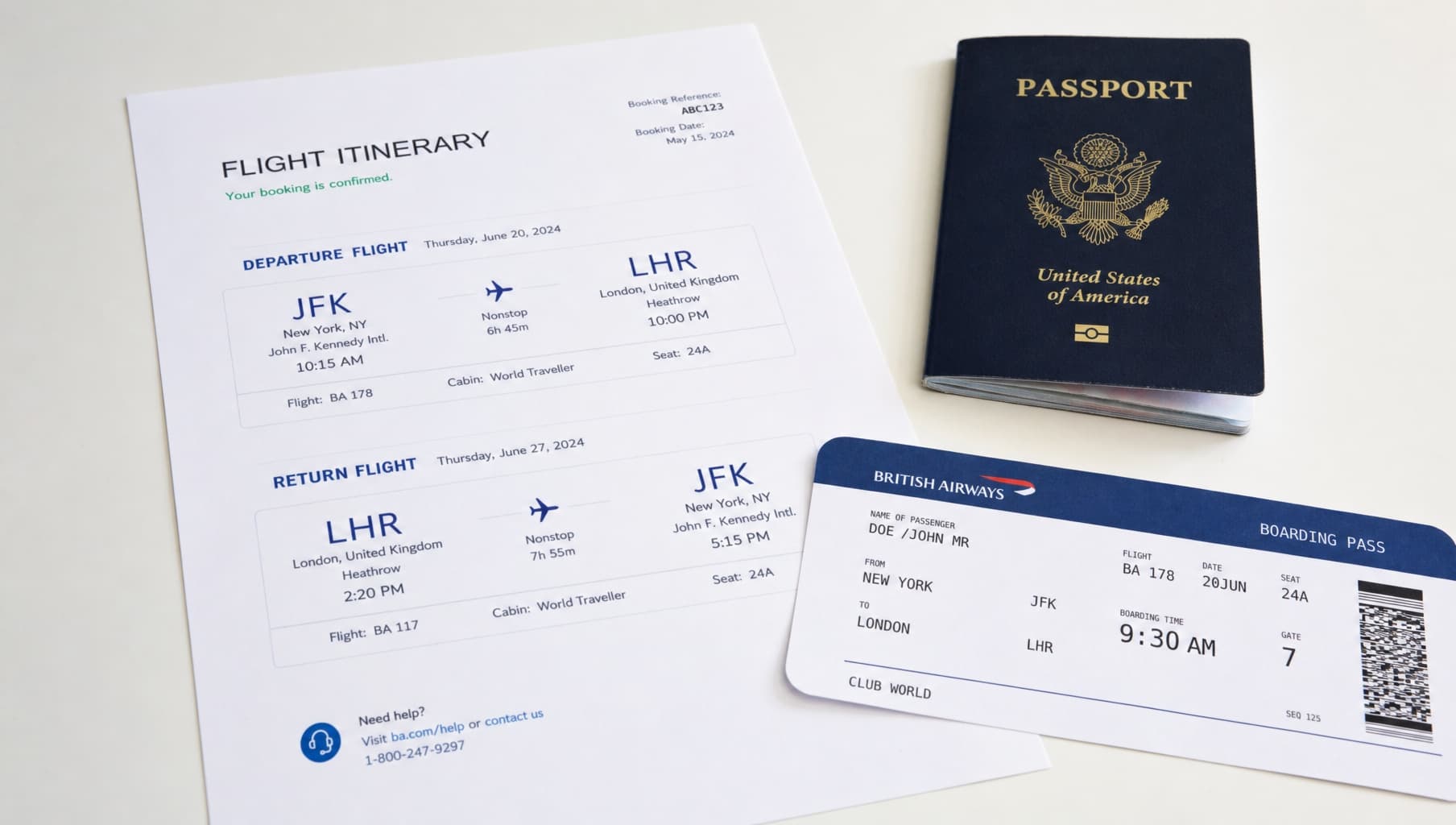
Most people buy a real ticket before their visa is approved, which is a financial risk worth avoiding. A flight itinerary from Travl.ae gives you a verifiable reservation with a real PNR code, starting from AED 49, without committing to a non-refundable ticket. You can read more about why this approach makes sense in our post on why buying a real ticket before your visa is approved is a risky move.
Travel insurance is equally important — and mandatory. Schengen embassies require a minimum of EUR 30,000 in medical coverage. Travl's Schengen visa insurance, issued by AXA and accepted at VFS Global and BLS International, starts from AED 30 and covers medical emergencies, hospitalisation, and repatriation.
For a full overview of everything you need to submit, check the Schengen visa documents checklist for UAE residents — it covers every document category with practical guidance.
Getting your financials in order is worth the effort. A clean, well-presented bank statement, paired with the right supporting documents, makes a strong case for your application and reduces the chance of rejection.