
Hajj and Umrah Travel Insurance from the UAE
Yes, UAE residents should buy travel insurance for Hajj or Umrah, and the right plan is worldwide cover rather than a Schengen policy. Saudi Arabia requires a meningococcal vaccine given at least 10 days before arrival, and your visa comes through a licensed operator registered with Awqaf. Travl's international plan from AED 70 adds EUR 80,000 or more in medical cover, repatriation and trip cancellation, issued by AXA.
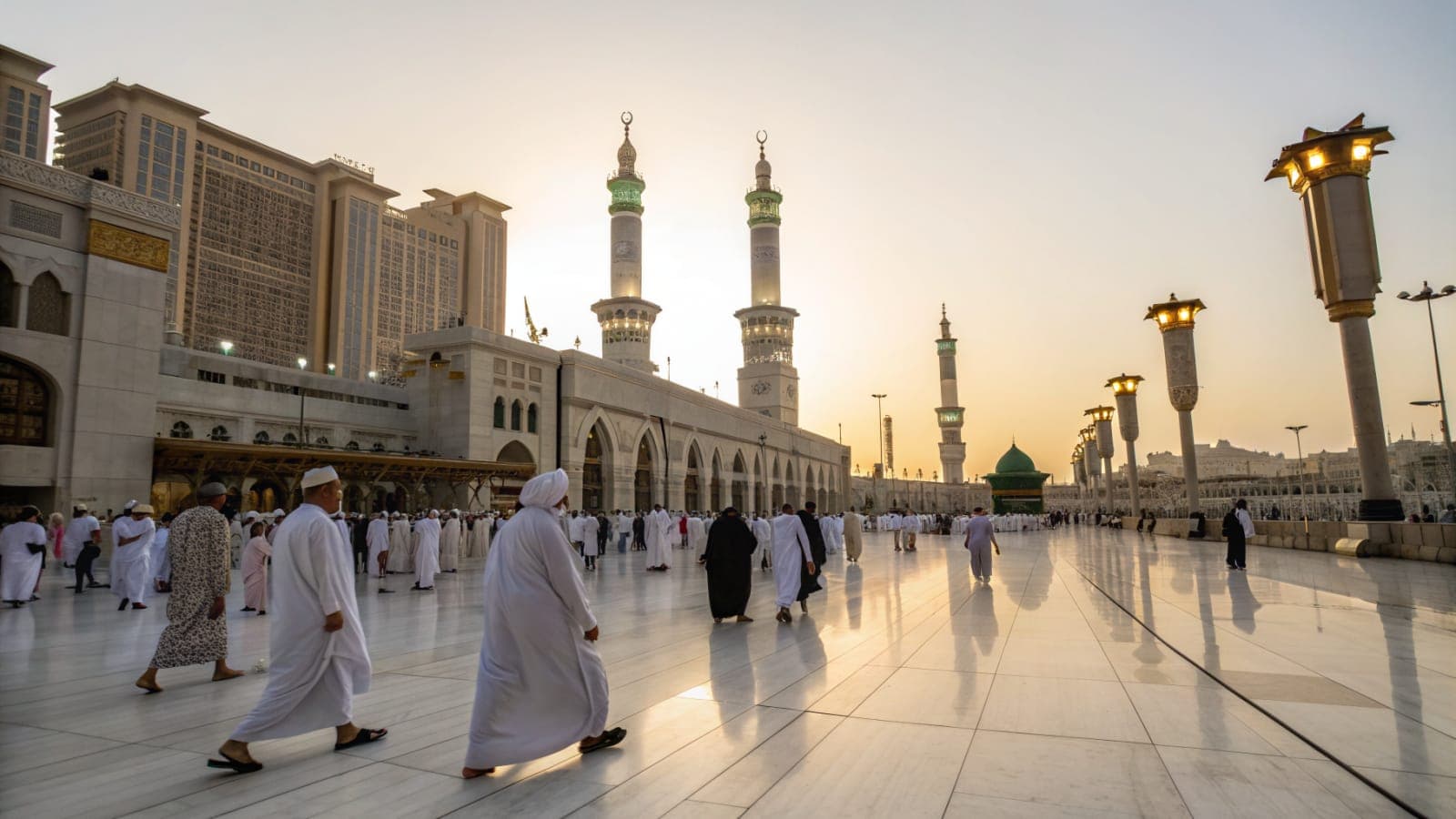
Yes, you should buy travel insurance for Hajj or Umrah from the UAE, and the plan to buy is a worldwide medical policy, not a Schengen one. Saudi Arabia is not in the Schengen area, so the EUR 30,000 Schengen minimum does not apply. What you need is emergency medical cover, repatriation to the UAE, and cancellation protection for a trip that is paid to an operator months in advance.
Travl's international travel insurance gives you worldwide cover with EUR 80,000 or more in medical benefits from AED 70, issued by AXA. This guide walks through what Saudi Arabia and the UAE actually require, where insurance fits, and what gets pilgrims turned away.
At a glance: Hajj and Umrah from the UAE
| Fact | Detail | Source |
|---|---|---|
| UAE permit | Every Hajj and Umrah pilgrim must apply for a permit and register with the General Authority of Islamic Affairs and Endowments (Awqaf) | UAE Government portal |
| Who applies for the visa | Your licensed Hajj or Umrah tour operator applies on your behalf; the Saudi Ministry of Hajj and Umrah issues it | UAE Government portal |
| Hajj visa window | Issued from mid Shawwal until 25 Dhu Al Qadah, valid until 15 Muharram, and valid only for Makkah and Madinah | UAE Government portal |
| Meningococcal vaccine | ACYW conjugate vaccine within the last 5 years and at least 10 days before arrival (polysaccharide: within 3 years) | Saudi Ministry of Health |
| Hajj on a visit visa | Not allowed; Hajj needs a Hajj visa, a Saudi national ID or a Saudi residency permit | Saudi Ministry of Hajj and Umrah |
| Minimum age for an Umrah visa or permit | 5 years | Saudi Ministry of Hajj and Umrah |
| Travl worldwide cover | From AED 70, EUR 80,000+ medical, issued by AXA | Travl |
What you need before you fly
- A passport that your operator confirms meets Saudi validity rules for the dates of travel
- Your UAE residence visa and Emirates ID for the operator paperwork
- Registration with Awqaf and a signed contract with a licensed Hajj or Umrah operator
- A Hajj or Umrah visa obtained through that operator, or an Umrah permit shown in the Nusuk app for other visa types
- A meningococcal vaccination certificate that names the vaccine and the date it was given
- Any polio, yellow fever or COVID-19 proof that applies to your nationality or age group
- A doctor's letter and original-packaging medication for any chronic condition
- A travel insurance policy with emergency medical, repatriation and cancellation cover, bought before you pay the operator in full
Sort your travel insurance first
AXA-backed cover for UAE residents, issued the same day. From AED 30.
Do you need travel insurance for Hajj or Umrah?
You do, because a pilgrimage combines heat, crowds, long days on foot and a large non-refundable payment, and none of that is protected by your UAE health card. The Saudi Ministry of Health tells pilgrims, especially older ones, to avoid direct sun and drink enough fluids because heat illness is a known risk during the rituals, according to its 1447H (2026) health requirements. Heat stroke, a fall in Mina, or a chest infection picked up in a crowd all lead to a hospital bill you pay yourself without cover.
The Official Hajj Delegation of the UAE provides free healthcare services to UAE pilgrims in Saudi Arabia, as described on the UAE Government portal. That is a camp-level clinic, not a policy: it does not fly you home on a medical flight, refund your package if your father falls ill the week before departure, or replace a lost bag.
A worldwide policy such as Travl's international plan fills those gaps with EUR 80,000 or more in medical cover, trip cancellation, baggage loss and flight-delay benefits from AED 70. If you already hold an annual multi-trip policy from AED 245, check that Saudi Arabia sits inside its worldwide area and that your trip length is within the per-trip limit.
How do UAE residents get a Hajj or Umrah visa?
Through a licensed operator, not on your own. The UAE Government portal states that all Hajj and Umrah pilgrims must apply for a permit and register with the General Authority of Islamic Affairs and Endowments, and that the tour operator then applies for the visa on your behalf. The Saudi Ministry of Hajj and Umrah issues the visa itself.
Hajj visas run on a fixed calendar. The same UAE page states they are issued from mid Shawwal until the 25th of Dhu Al Qadah, remain valid until the 15th of Muharram, and are valid only for Makkah and Madinah. It also notes that women under 45 need proof of a Mahram to obtain a Hajj visa.
A visit, tourist or work visa does not work for Hajj. The Saudi Ministry of Hajj and Umrah FAQ answers that question with a flat no: Hajj requires a Hajj visa, a Saudi national ID or a Saudi residency permit. For Umrah the ministry sets a minimum age of 5 for a visa or permit, verifies permits through the Nusuk and Tawakkalna apps, and allows only one active Umrah permit at a time.
Sign the operator contract before you pay. The UAE portal says pilgrims and operators should sign a contract prepared by the Department of Hajj and Umrah at Awqaf, and that disputes go to that department or the Complaints Committee of the official Hajj delegation. Keep a copy: it is the document an insurer will ask for if you ever claim for cancellation.
Which vaccinations does Saudi Arabia require for Hajj and Umrah?
The meningococcal vaccine is compulsory for every pilgrim, and the timing rule is what catches people. The Saudi Ministry of Health requirements for 1447H (2026) accept a quadrivalent ACYW conjugate or pentavalent ACYWX conjugate vaccine given within the last 5 years and at least 10 days before arrival, or a polysaccharide vaccine given within the last 3 years. If your certificate does not name the vaccine type, Saudi Arabia treats it as valid for 3 years only.
The UAE Government's health conditions for Hajj page lists what Saudi Arabia mandates for pilgrims arriving from outside the Kingdom: meningitis, yellow fever, polio, COVID-19 and seasonal influenza. Polio and yellow fever rules depend on the country you are arriving from, and the Saudi document lists Pakistan and Afghanistan among the countries whose travellers must show polio vaccination.
The risk is real, not theoretical. WHO reported 11 confirmed cases of invasive meningococcal disease linked to Umrah in early 2025, none of the patients vaccinated, and noted that only 54 per cent of international Umrah pilgrims had complied with the vaccination requirement, in its disease outbreak news of March 2025. Book the jab at least 10 days before departure and carry the certificate with your passport.
Can you go on Hajj with a chronic illness?
Only if your condition is not on the Saudi list of illnesses that rule out the physical demands of Hajj, and only with your paperwork in order. The Saudi health requirements ask origin countries to certify that pilgrims are free of conditions such as kidney failure needing dialysis, heart failure with symptoms on minimal effort, chronic lung disease needing oxygen, pregnancy in the last three months, active cancer on chemotherapy, and severe neurological or psychiatric disorders. A pilgrim health status certificate signed by a physician is part of that document.
For managed conditions such as diabetes, high blood pressure or asthma, the same Saudi document advises carrying a written summary of your condition plus enough medication in its original packaging. WHO's Umrah and Hajj health messages repeat that advice and add that you should see your doctor about any pre-existing condition before you travel.
Your insurance needs the same honesty. Declare conditions at purchase and read the wording on pre-existing illness, which we explain in our guide to pre-existing medical conditions and travel insurance. Pilgrims over 60 should also read our guide to travel insurance for seniors from the UAE, because age bands and limits differ from a standard adult policy.
What should a Hajj and Umrah travel insurance policy cover?
Emergency medical treatment, medical repatriation and trip cancellation are the three benefits that matter, in that order. Medical cover pays the hospital in Makkah, Madinah or Jeddah directly or reimburses you, and it should include hospitalisation and outpatient treatment for heat illness, respiratory infection and injury. Travl's travel medical insurance is built around that, with COVID-19 cover included.
Repatriation is the benefit that turns a bad week into a manageable one. A medical flight from Jeddah to Dubai with a nurse on board is priced far beyond what a family can pay on the day, and our explainer on medical evacuation and repatriation cover shows how it works in practice. Look for repatriation of remains as well, since some families choose burial in the Kingdom and others do not.
Cancellation cover protects the package price when you or a close relative cannot travel for a medical reason. Because Hajj packages are paid well ahead of the visa window, buy the policy on the day you pay the deposit, not the day before you fly. A single-trip policy with dates that run from your outbound flight to your return covers the whole pilgrimage, including the days spent in Madinah.
Baggage and flight delay are secondary but useful. Pilgrims travel with ihram, medication and often gifts for the return, and Travl's international plan includes baggage loss and flight-delay benefits alongside the medical cover. Compare all plans and prices on the travel insurance plans for UAE residents page and pick the one that matches your dates.
Does the insurance that comes with a Saudi visa replace a travel policy?
No, because any cover bundled with a Saudi visa is aimed at emergency treatment inside the Kingdom, not at the rest of your trip. It does not refund a cancelled package, replace lost baggage, cover a delayed connection through Jeddah, or pay for a medical flight home to the UAE. WHO also notes on its Hajj and Umrah page that many pilgrims enter on tourist or business visas rather than pilgrimage visas, and what those visas include varies.
Treat visa-linked cover as a floor and an AXA-issued travel policy as the real protection. The Travl travel insurance hub lets you compare single-trip, medical, international and annual plans side by side and buy in minutes with the policy emailed to you.
Why do Hajj and Umrah applications and claims get refused?
Vaccination paperwork is the number one avoidable cause. A meningococcal certificate dated fewer than 10 days before arrival, older than 5 years for a conjugate vaccine, or missing the vaccine name is not accepted under the Saudi Ministry of Health rules. Ask the clinic to print the vaccine brand and date clearly on the card.
Wrong visa type is the second. The Saudi Ministry of Hajj and Umrah does not permit Hajj on a visit or work visa, so a pilgrim who tries to attend Hajj on a tourist entry is stopped. For Umrah, an active permit in Nusuk is checked on arrival, and a second booking cannot be made while a first permit is still live.
Other refusals come from the UAE side. Skipping Awqaf registration, travelling with an unlicensed operator, or a woman under 45 arriving without Mahram proof for a Hajj visa all break the rules on the UAE Government portal. A health condition on the Saudi exclusion list, such as third-trimester pregnancy or dialysis, also stops the pilgrim health certificate being signed.
Insurance claims fail for their own reasons. An undeclared pre-existing condition, a policy bought after the illness that caused the cancellation, missing hospital reports, or a claim submitted without the operator contract and receipts are the usual ones. Travl's human-assisted claims process takes the file to AXA for you, and our guide on how to file a travel insurance claim lists exactly what to keep.
What does Hajj and Umrah travel insurance cost from the UAE?
Insurance is the smallest line on the bill. The package itself depends on accommodation grade, distance from the Haram, transport and airline class, as the UAE Government portal explains, and visa charges are set by the Saudi authorities and collected through your operator. Travl's prices are fixed and public.
| Item | Who sets it | Cost |
|---|---|---|
| Travl international travel insurance (worldwide, EUR 80,000+ medical) | Travl, issued by AXA | From AED 70 |
| Travl annual multi-trip insurance (12 months, unlimited trips) | Travl, issued by AXA | From AED 245 |
| Hajj or Umrah visa | Saudi Ministry of Hajj and Umrah, applied for by your operator | Included in the operator package; confirm the amount with your operator |
| Awqaf registration and operator package | Licensed UAE operator under Awqaf regulation | Varies by accommodation grade, proximity to the Haram and airline class |
| Meningococcal and other vaccinations | UAE clinic or hospital | Set by the clinic; ask for the certificate at the time |
Choosing between single-trip and annual cover comes down to how often you leave the UAE. One pilgrimage a year points to the single-trip or international plan; a pilgrimage plus two or three other trips makes the annual plan from AED 245 cheaper overall, which we break down in single trip vs annual travel insurance. If anything about your dates or age band is unclear, the Travl team on WhatsApp answers policy questions before you buy.
Sources
- Travelling abroad for Hajj and Umrah, the official UAE Government portal (u.ae)
- Health conditions for Hajj, the official UAE Government portal (u.ae)
- Health requirements and recommendations for travellers to Saudi Arabia for Hajj, 1447H (2026), Saudi Ministry of Health
- Frequently asked questions, Saudi Ministry of Hajj and Umrah
- Invasive meningococcal disease, Kingdom of Saudi Arabia, disease outbreak news, World Health Organization
- Umrah and Hajj: key health messages before, during and after your trip, WHO Regional Office for the Eastern Mediterranean
Cover your pilgrimage before you pay the operator
Travl issues AXA-backed worldwide travel insurance from AED 70 with EUR 80,000 or more in medical cover, repatriation to the UAE and trip cancellation, emailed to you in minutes. Travelling more than once this year? The annual multi-trip plan from AED 245 covers every trip for 12 months. Compare all plans on the Travl travel insurance page.
Frequently Asked Questions
Dummy ticket
From USD 13
A real flight reservation with a verifiable PNR, issued by Dummy Ticket 365 and delivered by email in minutes.
Dummy Ticket 365